The Iron Cowboy Never Overtrained
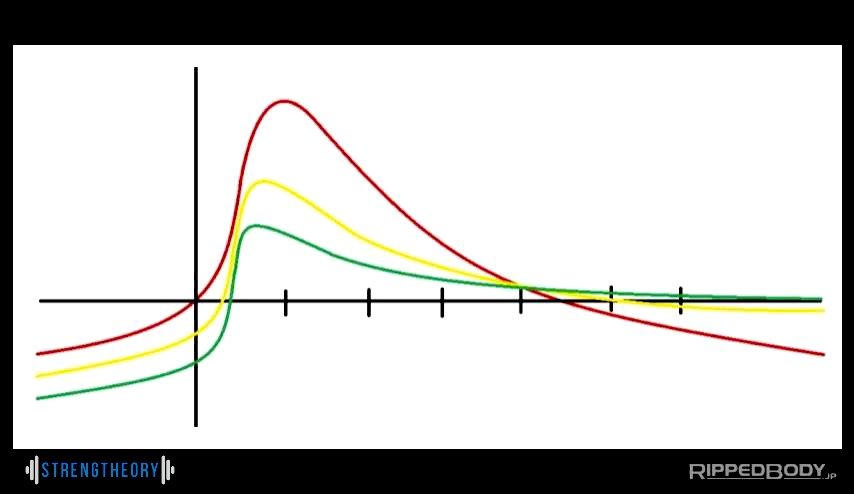
The Iron Cowboy, James Lawrence, completed 50 triathlons across 50 states in 50 days — a triathlon every single day. He felt like hell, but he wasn't overtrained. That word gets slung around by anyone who squatted two days straight or took a HyRox class. True overtraining is a clinical condition that takes weeks of deliberate, absurd overreaching to approach. Lawrence endured more volume in a month and a half than most lifters accumulate in a year, and his body kept adapting. The fatigue that crushes your 1RM after a 5K run is acute, not chronic. It masks your fitness, but it recovers. If he could string 50 consecutive high-volume days without falling into a clinical hole, then your two tough sessions are just normal training stress — not a reason to hit the panic button.
Deadlift Heavy Every 2-3 Weeks, Not Weekly
Once you've pulled 2x your bodyweight, heavy deadlifting more than once a week hits a point of diminishing returns. The deadlift drains your nervous system more than the squat or bench — physiologically and neurologically. In practice, max-effort work at 85% or more of your 1RM should only show up every 2-3 weeks for most lifters. A sample heavy day might be clusters: 4x4 at 70% in week 1, 3x4 at 75% in week 2, 5x2 at 80% in week 3, then a lighter 3x3 at 65% in week 4. Even then, you're not grinding reps on every set; you're taking one rep every 15 seconds to keep bar speed high. The point is to get strong without accumulating neural fatigue that makes your next session a struggle. Heavier isn't always better; more timely is.
 Image: tonygentilcore.com
Speed Work for the Deadlift at 60-70%
If you're deadlifting twice a week, make the second day technical and fast. Use 60-70% of your 1RM in singles or doubles, resting 30-45 seconds between attempts. A four-week bell curve might look like: 8x1 at 60% in week 1, 10x1 at 60% in week 2, 12x1 at 60% in week 3, then 6x1 at 70% in week 4. The bar moves fast, your form stays sharp, and your nervous system gets a groove without taking a beating. This is the kind of work that builds muscle and skill without the 'annihilation' effect. You're still pulling heavy-ish, but the total tonnage is low and the bar speed high. Many lifters ignore this range entirely and end up grinding every rep, which makes recovery a slog. If you want to deadlift more frequently, this is the way to do it — not by piling on more maximal attempts.
Bodyweight Bulgarian Split Squats for Time
Take the barbell off and load your own bodyweight for a change. Bulgarian split squats done for time, with controlled tempo, will humiliate you at a fraction of the mechanical loading. A four-week progression: 3 sets of 30 seconds per leg in week 1, 3 sets of 40 seconds in week 2, 4 sets of 40 seconds in week 3, and 3 sets of 60 seconds in week 4. Want to make it worse? Slow the tempo to 2 seconds down and 2 up, or stretch it to 3 seconds down and 3 up. You'll feel the quad and glute burn while the bar stays on the rack. This is a way to get a high training stimulus without adding more plates to the spine. It's particularly useful for lifters who already hit the big lifts hard and need accessory work that doesn't crush their recovery. The clock is the load, and it's brutally honest.
Deload by Cutting Volume, Not Intensity
The fourth week of most programs should be a deload, and the way to do it is to trim volume but keep intensity high. For a squat, that might look like week 1: 5x5, week 2: 4x5, week 3: 3x3 plus 2x6, and week 4: 3x3. You're still moving respectable loads, but total tonnage drops. This is because overtraining, when it does happen, usually comes from accumulated volume, not from intensity. Alternatively, you can cut accessory work entirely and keep your main lift sets as planned. The goal is to feel fresh for the next block, not to chase a pump. Some people deload by taking a week off everything; others switch to a bodypart split or reduce training days from 4-6 to 3. The non-negotiable is that the total work falls, while the percentages of what you lift stay true.
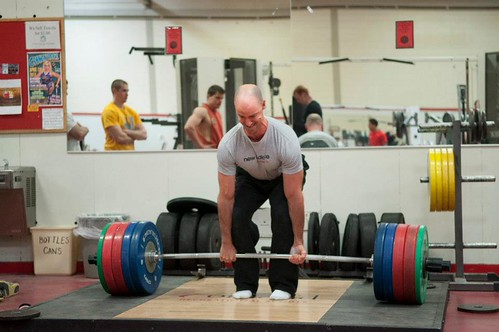 Image: tonygentilcore.com
Pat Davidson: The Strength Coach as Stress Manager
Pat Davidson, a strength coach known for his work with athletes and his barbell philosophy, sums it up: I'm a strength coach which means I am a stress manager more than anything else. The only difference between me and your shrink is that I want to dump as much stress on you as I possibly can to see what you can survive. If it doesn't kill you, it will likely make you stronger. That's the logic behind alternating high-stress accumulation blocks with lower-stress weeks. You can't annihilate every single session; you have to fluctuate. Coaches like Alex Viada and Chad Wesley Smith build their reputations on structured, periodized plans that push hard but cycle the stress. The word 'annihilate' only works as a mantra if it's part of a larger system that knows when to back off. If you're your own coach, the stress you manage is your own.