How do I position my feet for a deadlift?
For the vast majority of lifters, placing the feet just inside shoulder width with toes pointed relatively straight forward establishes a biomechanically efficient base. This specific stance positions the bar directly over the mid-foot, which is the critical first pillar of proper deadlift technique. In practice, stand with your feet in this position and let your arms hang naturally; the barbell should align over the center of your foot. If the bar is too far forward, it must travel backward during the lift, creating inefficient horizontal movement. If it is too far back, you may be off-balance. This setup ensures a vertical bar path, allowing force to transfer directly from the ground through your legs and hips into the bar, maximizing power for lifting heavy weights. The feet remain planted, providing a stable anchor point against which to push.
What are the three technique pillars for a perfect deadlift start position?
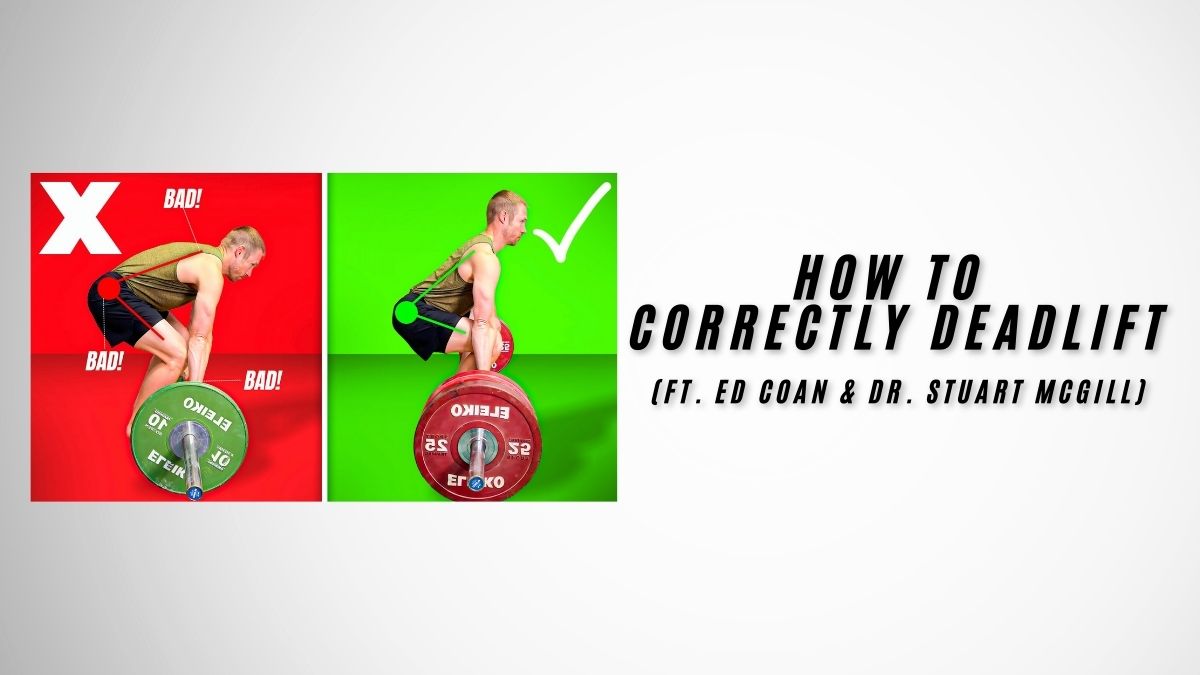
The three technique pillars for a perfect deadlift start position are: the bar directly over your mid-foot, the bar touching your shins, and the bar aligned with your posterior deltoid. This alignment ensures the bar travels in a straight vertical path, minimizes horizontal movement, and positions your shoulders correctly. The posterior deltoid, located at the back of the shoulder, when placed over the bar, sets a near-vertical arm position, which is more precise than the general cue 'shoulders over the bar.' In practice, you achieve this by standing with feet just inside shoulder width, gripping the bar so it contacts your shins, and ensuring your mid-shoulder is directly above the bar. This trio of cues prevents errors like excessive forward lean and creates a stable foundation for lifting heavy weights.
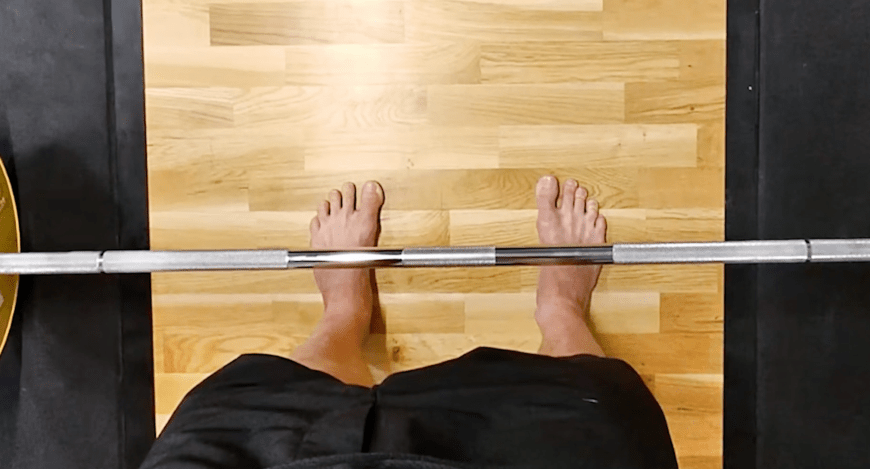 Image: squatuniversity.com
Why must the bar touch my shins during setup?
The barbell must make contact with the shins to ensure it remains positioned directly over the mid-foot throughout the lift. This contact is the second foundational technique pillar. If the bar starts inches away from the shins, one of two problems occurs: either the bar loses its optimal mid-foot alignment, forcing it to travel horizontally back toward the body as it rises, or the lifter shifts their entire body too far back to compensate, becoming off-balance and unable to generate maximal force. This principle applies to all lifters, regardless of height; tall individuals should not compensate by setting the bar far away. Verifying this contact during setup creates a direct, straight-line path for the bar from the floor to the lockout position, which is essential for moving maximal weights safely and efficiently. The sensation should be of the bar lightly grazing or pressing against the shins before any weight is lifted.
How does grip style influence deadlift mechanics?
The mixed grip—one hand over, one hand under—is commonly used because it provides a stronger hold, allowing lifters to handle heavier weights than with a double overhand grip. However, this grip introduces a significant mechanical consideration: the arms must be positioned nearly vertically. If the arms are not vertical, the underhand side will tend to pull the bar away from the body as you stand up, causing the barbell and torso to twist. This twist places uneven stress on the spine and back muscles. The corrective action is rooted in the third technique pillar: aligning the bar with the posterior deltoid (the back part of the shoulder). When the posterior deltoid is directly over the bar, the arms hang vertically as a side effect. If twisting occurs during a mixed-grip lift, it is a clear sign that the shoulders are too far forward at the start. Adjust by bringing the shoulders back until this alignment is achieved, which straightens the arm position and stabilizes the bar path against rotation.
What must I do before moving the bar off the ground?
Before the bar leaves the ground, the lifter must create full-body tension—a step referred to as 'getting tight.' A critical component of this is consciously and forcefully engaging the glutes. Most lifters fail to activate their glutes sufficiently during the setup, which leads to a common fault: the hips shooting up faster than the shoulders as the lift begins. This premature hip rise increases the angle of the torso, rounding the lower back and shifting the load inefficiently onto the spine. To practice this, assume the start position with the bar touching the shins and posterior deltoid aligned, then squeeze the glutes as tightly as possible as if preparing to push the floor away. This action locks the pelvis into a stable position and ensures that the force generated from the ground travels through the entire kinetic chain—legs, hips, and back—rather than concentrating force on the lumbar vertebrae. This preparatory tension is what allows the chest and hips to rise in unison during the initial pull.
 Image: squatuniversity.com
How should I perform the deadlift movement?
The ascent of the deadlift is best understood and executed as two distinct phases. The first phase, from the floor to just above the knee, functions like a squat: the chest and hips must rise at the exact same rate. This does not mean starting in a deep squat position; rather, it means maintaining the three setup pillars (bar over mid-foot, bar touching shins, posterior deltoid over the bar) and then 'squatting the weight up' to knee height. This synchronized rise keeps the back angle constant and the bar moving vertically. The second phase, from the knee to the lockout, is a hip hinge similar to a Romanian deadlift (RDL). Once the bar passes the knees, the movement becomes a powerful extension of the hips, driving them forward to a standing position. The cue is 'squat to the knee, then RDL up.' This sequence ensures the bar stays in continuous contact with the legs, maintaining balance and efficiency throughout the entire range of motion.
What do Ed Coan and Dr. Stuart McGill contribute to deadlift technique?
Ed Coan, renowned as the greatest powerlifter of all time, provides pragmatic, field-tested technique pillars. His emphasis includes aligning the bar with the posterior deltoid to create a vertical arm position, which is especially crucial for stabilizing a mixed grip, and the cue to 'get tight' by engaging the glutes before pulling to prevent the hips from shooting up. Dr. Stuart McGill, the foremost authority on spine biomechanics and back pain, contributes the scientific understanding of why these techniques work. His research underpins principles aimed at minimizing shear forces on the spine and preventing common injuries. Together, their expertise merges practical lifting wisdom with biomechanical science. Coan's setup cues, like posterior deltoid alignment, directly implement McGill's goal of a neutral spine and efficient force transfer, offering lifters a method that is both highly effective for performance and grounded in injury prevention.
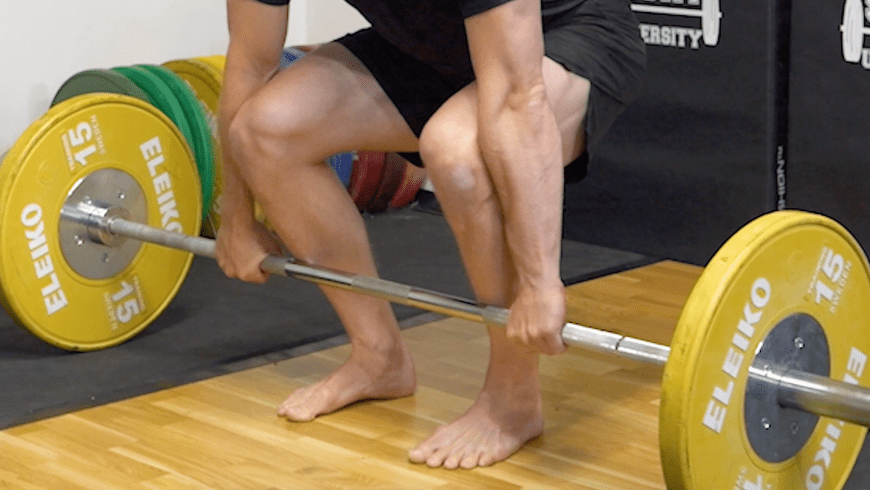 Image: squatuniversity.com