Adding Load: Plates and Dumbbells
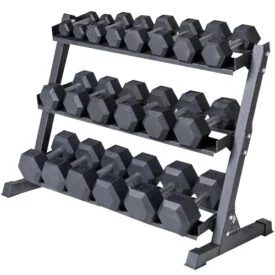
Adding weight to your trunk is the fastest way to force adaptation. The Again Faster Evo Bumper Plates, sold in pairs from 10 to 45 pounds and in sets up to 1,000 pounds, let you load movements like the Russian twist or the side bend without killing your setup. For a more granular jump, REP Fitness Rubber-Coated Hex Dumbbells come in sets from 5-50, 5-75, and up to 100 pounds; a 5-50 set starts at $1,099.99. The key is to increase the load by 5 or 10 pounds every few weeks, but keep your spine neutral throughout the rep. A weighted plank with two 25-pound plates on your back takes the same time as a bodyweight plank but doubles the tension on your transverse abdominis. The bumpers' virgin rubber won't mar your floor, and the dumbbells' ergonomic taper grips keep your hands from slipping when you're supersetting with carries.
Smart Resistance: The LIT Axis
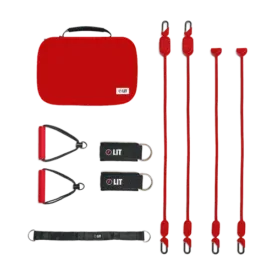
Smart resistance comes from the LIT Method LIT AXIS, a 3.5 by 1.5 inch device that connects to two pairs of resistance bands, totaling 0 to 90 pounds depending on the package. At $199 to $339, it's a compact alternative to a cable machine. The app offers video tutorials, and the bands allow for anti-rotation exercises like the Pallof press and the woodchopper. Progression is straightforward: increase the band resistance, or slow down the tempo to increase time under tension. The AXIS's small footprint—it fits in a drawer—makes it a practical choice for apartment dwellers. For a trainer, the app's video library is a guide to proper form, but the device itself does not load the spine directly, so you can use it daily without the recovery demands of heavy lifting.
Angles of Difficulty: Benches
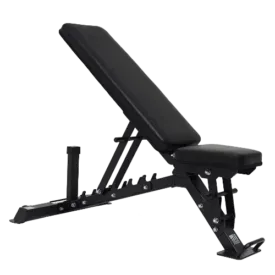
Decline benches change core work by giving gravity a bigger lever. The Force USA FID offers seven backrest angles and three seat angles, with a 1,300-pound capacity, priced at $449.99. As you increase the decline, the sit-up requires more abdominal force to curl your torso against gravity. The Finer Form Semi-Commercial Sit-Up Bench Elite, at $249.99, weighs 46 pounds, holds up to 660 pounds, and has a height limit of 6 feet 7 inches. Its leg rollers anchor your hips, so you don't cheat by swinging your legs; you can also reverse position and use the aluminum handle for leg raises. For progression, start at a 10-degree decline and move to 20 degrees once you can complete three sets of 15 reps with good control. The seat angle adjustments allow you to isolate the lower abs differently.
Stability and Rollouts
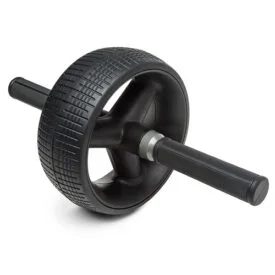
An ab roller and a balance trainer both challenge the core's ability to resist movement. The Rogue Ab Wheel has a 3-inch wide wheel and an 8-inch diameter, with a rubber handle, for $75. The wider wheel gives you more lateral stability, so you can focus on keeping your hips from sagging. The BOSU Ballast Ball costs $59.99 and comes in 55 to 65 cm diameters, with a 300-pound capacity. Placing your forearms on the dome forces your core to fire to keep your body level; you can add a plank or a push-up. Progression for the roller: start with kneeling rollouts, then move to standing once you can keep your back flat for ten reps. For the BOSU, begin with a static plank, then progress to shoulder taps or mountain climbers. The instability is the load—your muscles have to work isometrically.
Machines and Professional Development
For those who want a machine, the Fitlaya Ab Machine combines a small footprint 35.5 inches long, 15.7 inches high, and 34.5 inches wide, weighing 23 pounds, with a 440-pound capacity—all for $119.99. It's designed for seated spinal flexion and has a foot anchor to isolate the rectus abdominis. While it is a single-purpose tool, its compactness makes it a viable home option. For coaches looking to deepen their knowledge, the Core Collective Fall Seminar takes place October 24-25, with an early-bird rate of $249 until September 15 (then $299). Presenters include Dr. Lisa Lewis on boundaries, Jarrod Dyke on youth strength progressions, and Dr. Jen Kaplan Kerner on perimenopause. That seminar is not about equipment, but about programming and coaching nuance—something that's often more important than the hardware.