Why Your Glutes Are the Body's Anchors
Your glutes are the workhorses of nearly every movement you do. They fire when you sit down, stand up, walk, climb stairs, and squat. Leigh Taylor Weissman, a personal trainer, previously told Women's Health: “Glute strength is crucial for stabilizing your hips and supporting your lower back, which helps you move better and stay pain-free.” That support matters more as you age, when muscle mass and bone density naturally decline. Building these muscles is a direct way to keep moving well for a lifetime. The glutes are actually three distinct muscles: the gluteus maximus, the gluteus medius, and the gluteus minimus. All three work together to power the lower body and shield the spine from strain. To hit all three without any gear, you can choose from three squat variations: the standard bodyweight squat, the single-leg box squat, and the Bulgarian split squat. Each works the muscles differently—the standard squat builds the whole group, the single-leg box adds a balance challenge, and the Bulgarian split squat focuses on the lower glute max and glute medius, with a slight rotation firing the minimus. For a fast, equipment-free session, do 3 sets of 8 to 12 reps of each move, resting 30 seconds between sets, then rest 1 minute and repeat the entire circuit for a total of three rounds—all within 15 minutes.
The 15-Minute Circuit That Needs Nothing But a Floor
Block out 15 minutes and clear a floor space—that's all this glute circuit requires. You'll perform three sets of 8 to 12 reps for each exercise, with 30 seconds of rest between sets. After you finish one set of one move, move directly to the next. Once you've completed a set of every exercise in the circuit, rest for 1 minute and repeat the whole thing—two more times, for a total of three rounds. The entire session runs about 15 minutes. No equipment, no weights, no machines. The protocol is designed to challenge the glutes through full range of motion while keeping rest short enough to maintain intensity. This structure works for beginners and advanced trainees alike, because you can adjust the difficulty by choosing a different squat variation or by changing your depth. The only gear you need is a chair or box for the single-leg box squat, and a small block or ball if you want a target for the Bulgarian split squat.

The Bodyweight Squat: Perfect Form First
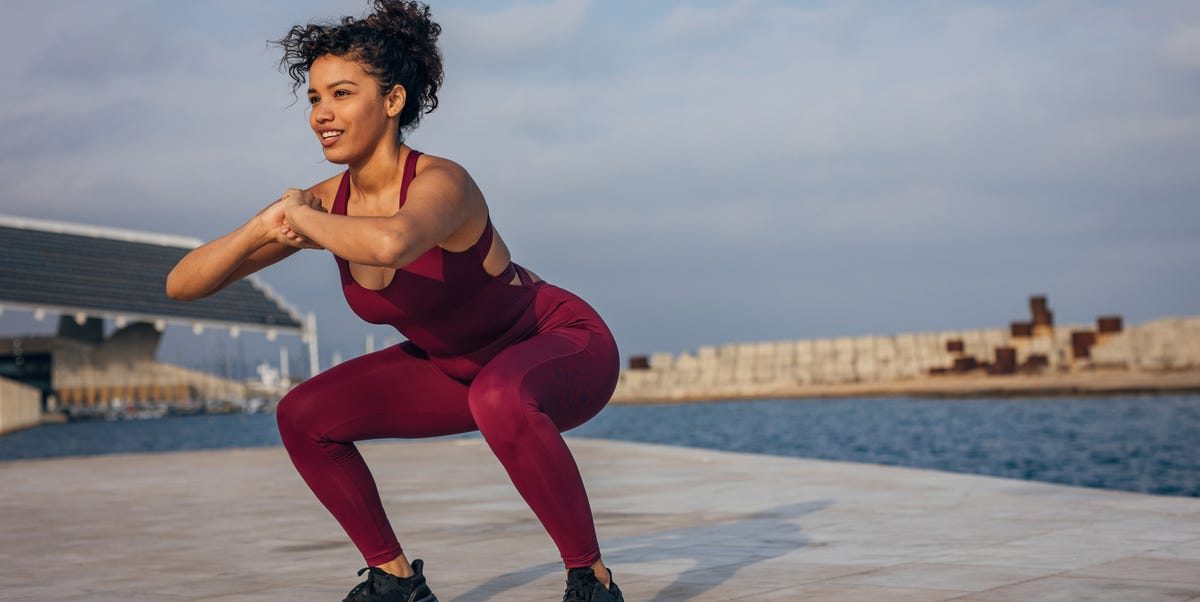
Start with the basic bodyweight squat to lock in your form before adding complexity. Stand with your feet shoulder-width apart and your arms at your sides. Push your hips back and bend your knees, lowering until your thighs are at least parallel with the floor—or as far down as you can go while keeping your heels planted. Press through your heels and return to standing; that's one rep. This movement recruits all three glute muscles, and for beginners it's the safest entry point because it requires no balance challenge and no added load. The key is to keep your weight in your heels and your torso tall as you descend. Going to parallel or slightly below builds strength through the deepest part of the squat. Don't rush the tempo; control the lowering phase for two to three seconds to maximize glute engagement. This is the foundation you'll build on with the tougher variations.
Single-Leg Box Squat: Balance Meets Power
The single-leg box squat takes the bodyweight squat and adds a serious balance and stability demand. It's a unilateral exercise, meaning it works one side at a time, and it's considered advanced because you must coordinate your core, hip, and knee while staying balanced. Set a box or chair behind you. Stand with your weight on your left foot and your right foot hovering off the floor. Engage your core, bend your left knee, and push your hips back to lower into a single-leg squat until your butt lightly taps the box. As you descend, extend your arms straight out in front and extend your right foot slightly forward for balance. Press through your left foot to return to standing. Complete all reps, then switch sides. Because this move is knee-dominant, using a higher box at first can help you nail the movement pattern with less depth. Weissman notes that this variation torches the glutes while also challenging coordination and stability.
Bulgarian Split Squat: The Brutal Favorite
This split-stance move is Weissman's favorite because it packs a punch in a short time—“a lot of bang for that brutal buck.” It targets the lower portion of the gluteus maximus and the gluteus medius, and adding a slight rotation to the working hip recruits the gluteus minimus, the smallest of the three. To set up, stand on one foot with the other knee bent and foot off the ground. Lower yourself until the hanging knee comes within a few inches of the floor—use a block or ball as a visual marker for where your knee should land. Keep your arms out front for balance. Press back up through the standing leg. Complete all reps on one side before switching. The rotation is the key to hitting that third muscle, making it the only variation that isolates the gluteus minimus.