Begin with a Plan You Can Trust
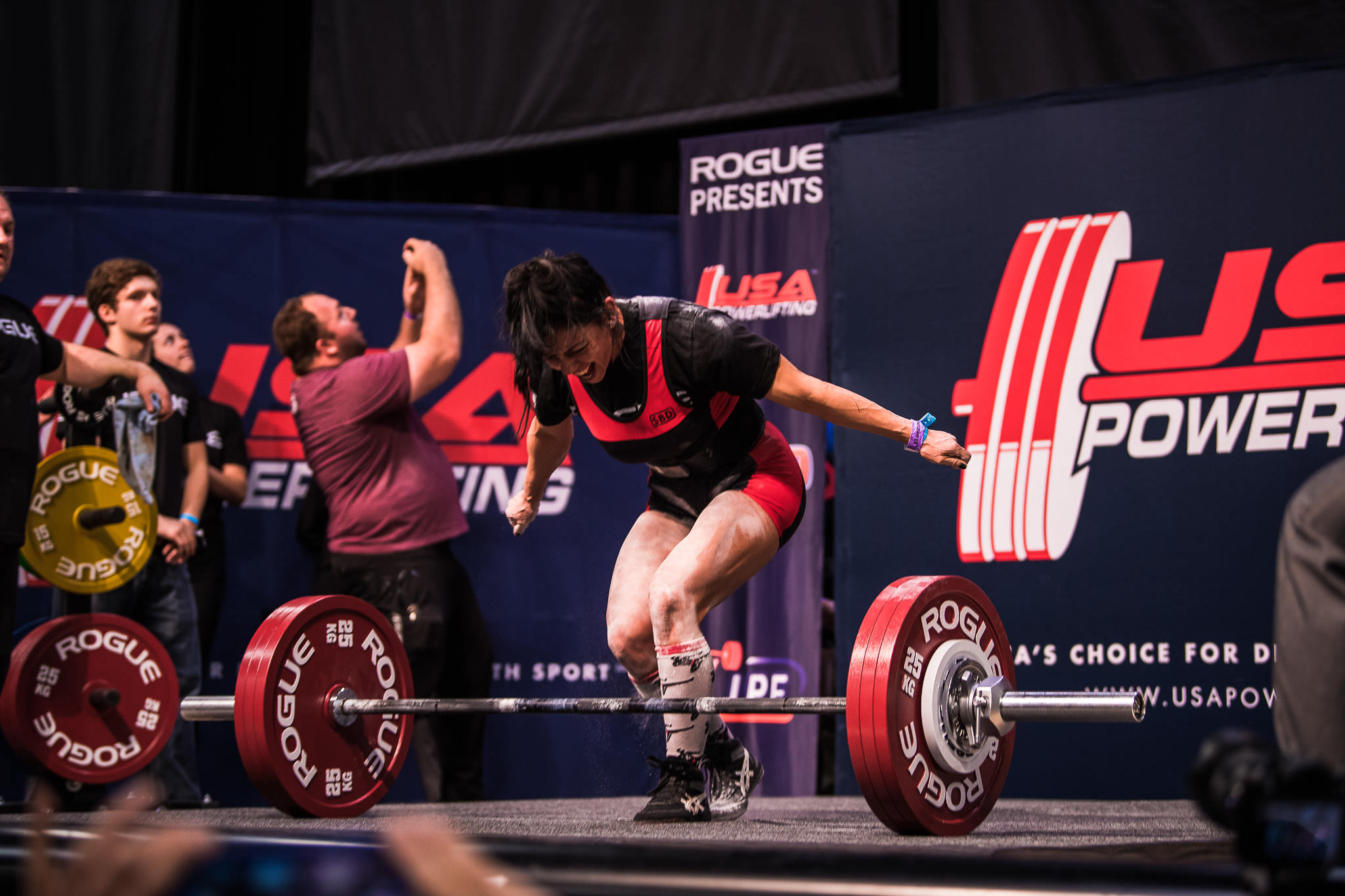
The platform is the last place a competition gets decided. By the time Marisa Inda walks out to make her first attempt, the outcome is already baked into the months of training behind her. Inda, a world and six-time national champion, has learned that the mental work starts in the weeks before the venue fills with spectators. She writes a well-thought-out plan—every session, every load, every rest day mapped out with meticulous care. Once that plan is on paper, she stops second-guessing it. The execution, she says, must be ferocious: no hesitation on the opener, no last-minute changes to the attempt order. The gym is where you earn the right to be calm on the day. If the plan is solid, the only job left is to trust it.
The Short List of Things You Don't Control
Inda's rule is simple: control what you can, and let the rest go. The list of what you actually control is short—the quality of your plan and the diligence of your execution. Everything else is noise. She rattles off the usual suspects at a meet: the song blasting over the PA that you didn't pick, the bar on the platform with its worn knurling or a slightly different circumference than the one you train with, the sun that angles straight into your eyes as you set up, and the training log of the competitor who tells you he pulled a world-record double last Tuesday. None of those belong to you. Inda says the mistake most lifters make is spending energy on these external variables—feeling the bar is slick, being annoyed by the music, worrying about what the other guy is doing. That energy is finite, and every watt you burn on the uncontrollable is a watt you don't have for the pull.
The Barbell Doesn't Know It's on a Platform
The intimidation factor of competition is often a self-inflicted wound. Inda points out that the weights in a meet weigh exactly as much as they do in your gym—a squat is still the same amount of steel, regardless of the judges' table or the crowd. The barbell doesn't recognize the change in venue. The only change is the addition of judges and spectators, both of whom have no physical effect on the load. The effort required to lift the bar is identical to the effort in training; the physics hasn't shifted because you're wearing a singlet. Inda's advice is to treat the platform as a familiar setup—the same three attempts, the same bar path, the same cues you've drilled for months. The meet does not change the movement; it just adds eyeballs.
Make the Meet a Payoff, Not a Test
Inda wants lifters to reframe the meet as the fun culmination of many weeks of deliberate work, not a high-stakes exam. When you walk out, you are not proving anything—you are collecting what you've already earned. She sets the expectation that the best performance comes when it matters, on the platform, precisely because the preparation was honest and complete. That reframing changes the body's response: anxiety shifts to anticipation, tension to ferocity. The sport's champion knows that the platform is where you celebrate the strength you built in silence. If you've trusted your plan and ignored the distractions, the meet is a reward—a loud, public finish to the quiet grind of the training block.