One Off-Bike HIIT Session a Week Is Enough to Move Your Numbers
You don't need to add another long ride to see speed gains. A single interval workout each week can lead to measurable results in aerobic capacity, sprint speed, and cardiovascular health, per Bicycling's Guide to Interval Training. The protocol is specific: intense efforts at 80–95 percent of max heart rate, followed by recovery at 40–50 percent. Host Chaz Turmon puts it plainly: 'HIIT doesn't only happen on the bike.' Running, rowing, strength circuits, or bodyweight intervals all fit the same segmented-intense format. Over time, your system adapts to those harder bursts, so you recover quicker and sustain challenging efforts longer. The time cost is a half hour, not an entire morning. For a cyclist with a packed calendar, one off-bike HIIT block per week is enough to make the next ride feel different.
Intervals Can Last 30 Seconds or Eight Minutes — Recovery Is the Dial
HIIT doesn't have one rigid interval length. The hard segments can be as short as 30 seconds or as long as eight minutes, and your recovery time should be set by what you want to improve. A longer recovery lets each sprint stay explosive; a shorter one forces you to work while fatigued, which builds endurance. The same hard-effort principle applies no matter which length you pick. Shannon Walsh, certified personal trainer and owner of Expansive Strength in Somerville, Massachusetts, notes the format is 'very adaptable and creative and can be really fun.' That flexibility is why off-bike HIIT works for so many riders: rowing, strength circuits, and bodyweight intervals can all follow the same interval pattern without a bike computer. You decide the duration, the recovery, and the movement, and the training effect adapts to you.
Cross-Training With Bodyweight Intervals Works Muscles the Bike Misses
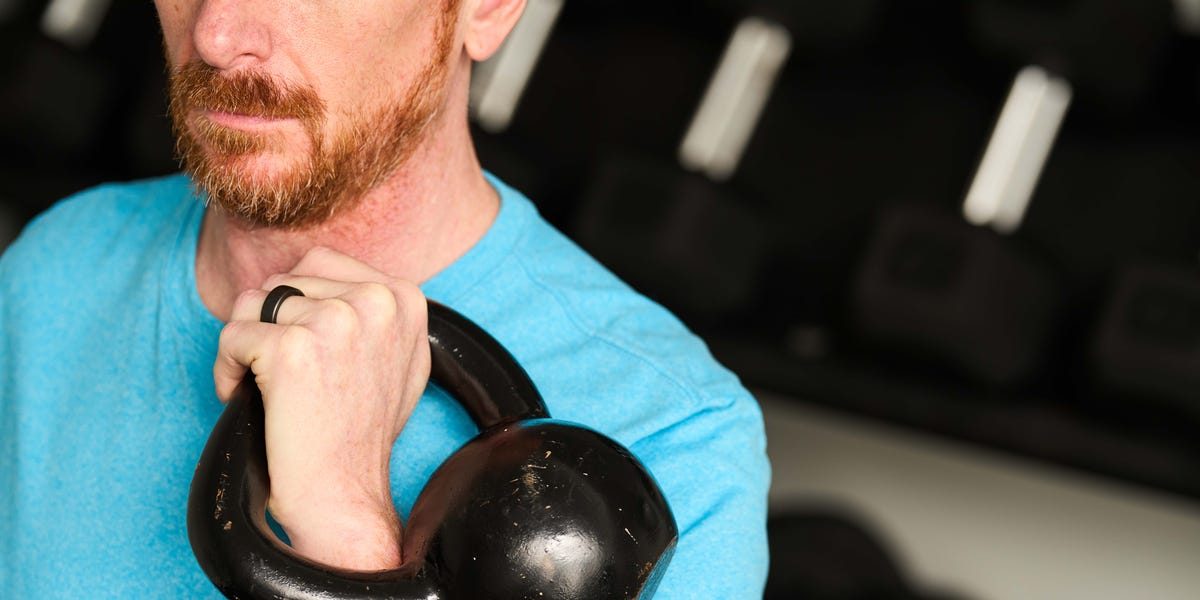
Pedaling strengthens a narrow set of movement patterns. Off-bike HIIT broadens the stimulus while still giving you the cardiovascular interval hit. Running, rowing, strength circuits, and bodyweight moves like squat jumps and skaters recruit muscles that don't fire on the bike, then those gains translate back to power, endurance, and on-bike performance. Certified personal trainer Shannon Walsh, owner of Expansive Strength in Somerville, Massachusetts, advises starting with a movement you already know — 'If you love kettlebells, you might start with kettlebells.' The familiarity makes it easier to read your body while you push through hard intervals. The result is a workout that diversifies your training, breaks monotony, and still follows the same segmented intense-effort structure as an interval ride. You're not just resting from cycling; you're filling the gap with work that pays off at the pedal.
Heart Rate and RPE: The Two Ways to Gauge an Off-Bike Interval
Your effort level is the data that matters. Heart-rate tracking and the rate of perceived exertion scale (RPE) both let you execute off-bike intervals without guessing. RPE is a 1-to-10 scale: you assign a number to how hard the effort feels. That number tells you when to push and when to ease off, just as a heart-rate monitor would. Both methods work across every off-bike format, from strength circuits to bodyweight moves, and both translate directly to on-bike intervals. The numbers that define HIIT are the same regardless of activity: hard segments should push your heart rate to 80 to 95 percent of your maximum, while recovery segments should bring it down to 40 to 50 percent. To put this into practice, choose your measurement before starting each interval. For a 30-second burst, you might aim for that top zone—check your monitor or ask yourself if the effort feels like a 9 or 10 on the RPE scale. In recovery, you should drop to a level where you can speak comfortably, roughly a 3 or 4. Tracking this way helps your body adapt to harder efforts and recover faster over time, which is the whole point of interval training. Pick the method that fits your equipment and preference; either one will let you calibrate intensity without guesswork.
A 30-Minute HIIT Session Replaces a Long Ride When the Day Gets Short
When you don't have 60 minutes for a ride, a 30-minute off-bike HIIT workout can deliver the interval stimulus you wanted. Many HIIT sessions fit in a half hour, making them practical on workdays and travel days. You can do a bodyweight circuit in your living room or a strength-circuit session at the gym. The shorter time doesn't mean softer work: the hard-recover pattern is the same as a longer interval ride. The strength-circuit version adds load with kettlebells or weight machines, while the bodyweight version uses your own body for resistance. Both share the same intense-effort-and-recovery structure, but the strength circuit builds muscular power, whereas the bodyweight version emphasizes cardiovascular conditioning. One weekly session of either has been shown to improve aerobic capacity, sprint speed, and cardiovascular health, so a shortened day still delivers the training effect.
Squat Jump: The Standing Start for Explosive Leg Power
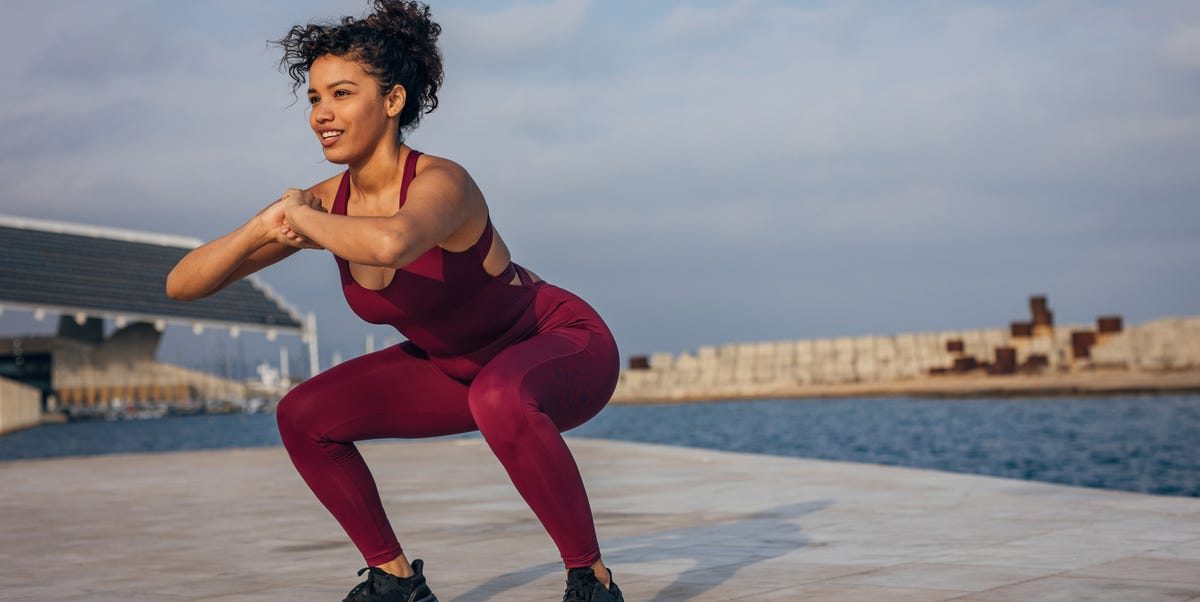
The squat jump opens the circuit with a plyometric burst. Start with feet hip-width apart, then send hips down and back into a squat, keeping chest up and core engaged. Drive through your feet to stand, exploding off the floor—the descent loads the muscles, and the jump releases that stored energy in a vertical lift. This is the only move in the circuit that begins from a full squat, and it works a different plane of motion than the skater's lateral hop. Land softly with bent knees to absorb impact. As the opening interval, it sets the high-intensity tone, and the 60-to-90-second recovery that follows gives your heart rate room to drop before the next exercise. Because it requires nothing but floor space, it's a practical way to start a no-equipment session.
Jumping Jack: A Simple Interval That Keeps Your Heart Rate Up
Feet start hip-width apart, arms at your sides. In one motion, jump your feet out wide while raising your arms out to the sides and overhead, then jump back to start. The jumping jack is the most accessible exercise in the circuit, but that simplicity is why it works for HIIT: it gets your arms and legs moving together and raises your heart rate fast. In the off-bike bodyweight workout, it sits after the squat jump, giving your legs a lower-impact movement while your upper body takes over some of the work. You can control the pace to keep the effort hard without needing extra equipment or space. The movement pattern is straightforward, so it's a good way to stay in the required work zone while you catch your breath.
High Knees: Quick Footwork for Sprint Speed
Stand tall with feet hip-width apart. Bend and raise your right knee to belly-button height while balancing on the left leg, then switch sides quickly. This is a rapid alternating knee drive, not a jog—your arms move in opposition and your feet stay light. The quickness of the switch is the key: the faster you alternate, the more this mimics the high-cadence leg turnover of a sprint. Driving each knee up forces your posture tall and your core engaged. The 60-to-90-second recovery after this 30-second burst lets your heart rate settle so you can maintain that turnover in the next interval. High knees are a bodyweight move that needs no equipment, making them easy to fit into any training space, and they directly echo the quick footwork used in accelerations on the bike.
Skater: Lateral Explosiveness for Stability and Power
Begin standing with feet hip-width apart. Shift weight to your left foot and push off to jump to the right, landing softly on your right foot with knee bent, hips sending back, and left foot reaching behind your right leg. Then push off the right foot to jump left, alternating sides. The skater is a lateral plyometric move that trains balance, hip stability, and explosive sideways power — all qualities that help you handle bursts and bike handling. Unlike the squat jump's vertical force, the skater challenges you in the frontal plane, and the single-leg landing forces each side to work independently. It's the final exercise in the off-bike bodyweight HIIT circuit, so you're doing it while fatigued, which is exactly when landing control matters.