Anchor Every Rep in a Deep Squat and Solid Plank
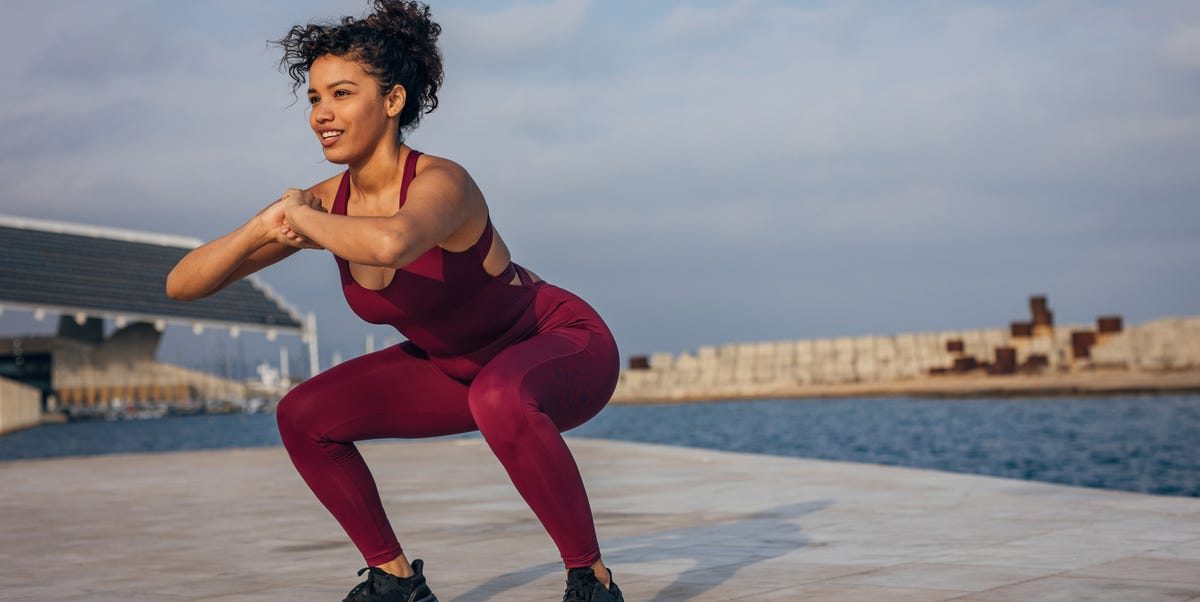
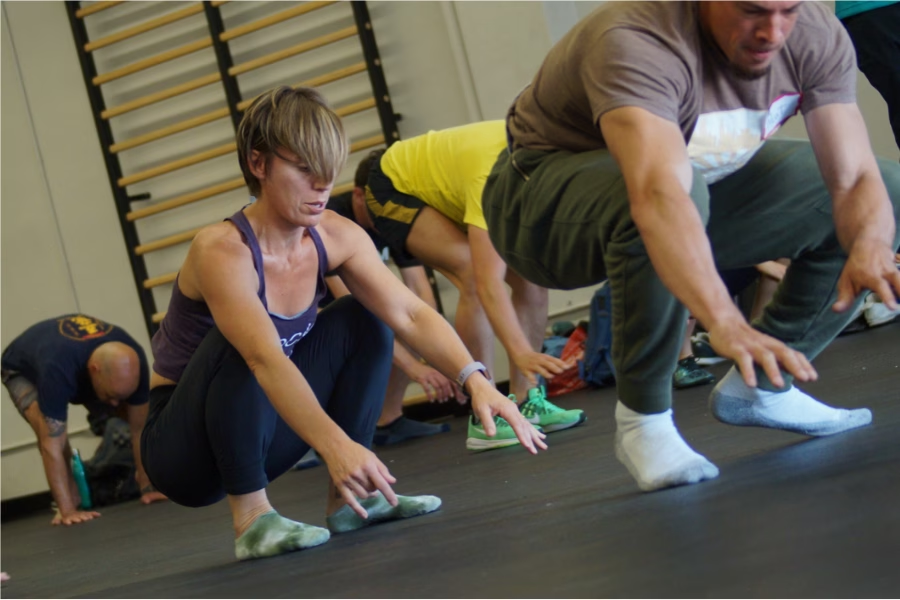
The burpee's foundation is a full, grounded bodyweight squat paired with a strong plank. For the squat, place your feet flat, keep your heels firmly on the ground, and descend until your hip crease passes below your knees. In the plank, your body should form a straight line from shoulders to ankles—no sagging hips, no shrugging shoulders. This two-position sequence appears in calisthenics, martial arts, and physical therapy because it builds stability that transfers directly to hiking trails or carrying heavy boxes. Practice these positions separately at first. Feel the engagement in your quads, glutes, and core. That deliberate feel, rather than just going through the motions, is the mechanism that turns a rep from punishment into practice. A few sets of this focused work build the base for everything that follows.
Execute 3-5 Flawless Reps Instead of 10 Sloppy Ones
The standard advice to crank out ten burpees often produces ugly results: a push-up that's more of a chest flop, a jarring landing, and no intention behind the motion. This is how the exercise earned its bad rap. The fix is to skip those ten sloppy reps entirely. Start with just 3 to 5 repetitions, performed with complete control, a few times per week. This measured dose prioritizes the feel of each position over rushing to hit a number. The mechanism is simple: fewer reps mean you can focus on a deep, stable squat and a high, rigid plank, building muscle memory for proper mechanics. Over time, this intentional practice yields greater strength and coordination gains than grinding through exhausting sets of poor form.
Omit the Jump and Push-Up If They Compromise Control
A 'real' burpee does not require a jump or a push-up. That standard is arbitrary. If you can't perform a full push-up with strict alignment—maintaining a rigid plank from shoulders to hips—or land a jump softly with bent knees to absorb impact, skip them. Forcing these elements into a fast-paced sequence reinforces bad habits: the push-up collapses into a chest flop, and the jump becomes a jarring landing that aggravates joints or creates new problems. The practice is to master the squat-to-plank transition first. Step back into a plank with no sagging hips, no shrugging shoulders; step forward and stand tall. Work on just 3–5 reps of that base, focusing on feeling each position rather than rushing through. You can reintroduce the push-up or jump only when you can execute them with the same quality as the base movement. They are add-ons, not requirements.
Construct the Movement in Three Deliberate Steps
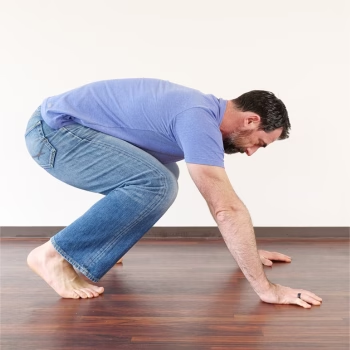
Break down the burpee into a simple three-step sequence to build competency. First, descend into a deep, stable squat; feel your weight in your heels with your chest up. Second, step one foot back at a time into a high plank; ensure your hips don't drop and your shoulders are packed—no sagging, no shrugging. Third, step your feet forward to the squat and stand tall, no jump needed. This method, practiced for 3–5 reps, lets you feel each position instead of rushing through. At its most basic, a burpee is a squat and a plank: two foundational positions that show up across calisthenics, martial arts, and physical therapy. Treating that combination as a skill rather than a punishment builds strength, stability, and full-body coordination. The goal is to build the base and let the extras come naturally—skill, not just sweat.
Incorporate Rolls, Crawls, and Other Playful Variations
When you stop thinking of the burpee as a fixed exercise and start thinking of it as a movement combination, everything changes. The squat-plank-squat sequence becomes a template for exploration. One favorite is the 'roller burpee,' where you flow into a forward roll and back into the squat—it's more fun, and it's more athletic. You can also add in crawls between reps, experiment with side sits, or build flowing sequences with single-leg transitions. Each variation keeps the squat-plank base intact while introducing new coordination demands. The burpee doesn't have to be rigid. Better practice beats more punishment every time, and turning a dreaded drill into a dynamic practice makes consistent effort more enjoyable. Over time, this builds a movement vocabulary that carries over to other training.

Personalize the Burpee to Address Your Specific Weaknesses
Use the burpee framework to spotlight and improve your physical limitations. This personalized approach reveals weaknesses and gives you a way to fix them. If achieving a full-depth squat is challenging, that's your work; focus on ankle mobility and hip flexibility until you can sit with heels down. If your plank wavers, practice holds to build shoulder stability. You can plug in what you need: add a lateral step for more hip strength, or practice a slow eccentric phase into the plank for better shoulder control. Masking weak spots with momentum keeps them weak. Acknowledging them and deliberately working on them is how you get stronger, more mobile, and more resilient in daily life as well as the gym. The base movement is a starting point—trust yourself to build from there.
Shift the Goal from Exhaustion to Improved Daily Movement
This mindset shift goes beyond form. You're doing this to get better at life, and the exercise is just the vehicle. A well-executed burpee builds the strength to carry heavy groceries, the stability to traverse uneven trails, and the coordination to sprint after a child across the yard. When you treat each rep as a skill rehearsal—emphasizing control and intention—you stop chasing exhaustion and start building capability. When movement feels good, you'll keep doing it. And when you keep doing it, you'll keep getting better. The burpee becomes a purposeful practice, not a punishment: a way to get a little better every day for the things that matter outside the gym. Exercise stops being a chore and starts being a skill you refine.
Avoid These Three Common Form Errors
Sloppy burpees are the problem, and three errors are most common. First, rushing the descent into the squat leads to collapsed form and knee strain. Second, allowing your hips to sag during the plank phase fails to engage the core—your shoulders shrug, your alignment breaks down. Third, landing jumps with stiff, extended legs jars the joints and can aggravate old issues or create new ones. The correction is built into the three-step practice: slow down the descent, consciously brace your core during the plank, and if you jump, bend your knees deeply to absorb the impact. Ten sloppy reps burn calories and make you tired, but they reinforce the very problems you're trying to fix—momentum masks weak spots and keeps them weak. One controlled rep with a full squat and a stable plank builds strength, coordination, and practical athleticism. Skip the volume; earn the quality.
Progress Gradually by Adding Elements Only with Mastery
Treat burpee components as progressive skills rather than a single pass-fail test. Start with the basic version: a bodyweight squat, stepping back into a plank, stepping forward, and standing tall. Practice just 3–5 reps of this, a few times per week—that frequency goes a long way. Focus on what each position feels like: heels grounded in the squat, hips level and shoulders packed in the plank, a controlled transition between them. Once these positions feel solid and consistent, you can consider layering in a push-up or a small jump, one addition at a time. Each new element should feel controlled and intentional, built on top of what came before. This gradual progression ensures each phase is solidified before you advance, building a resilient, capable movement pattern over time.
The Roller Burpee: A Template for Athletic Exploration
The roller burpee treats the squat-plank-squat movement as a template for exploration. To execute it, stand from the basic squat, flow into a forward roll, and then return to the squat position to begin the next rep. This variation introduces rotational movement, challenging your coordination and spatial awareness in ways a standard burpee does not. It's more fun, and it's more athletic. The squat-plank base provides the foundation, and the roll is the creative addition that changes the exercise from a rigid sequence into a playful drill. You can personalize training by extending the basic pattern with crawls, side sits, single-leg transitions, or flowing sequences. Each addition shifts the relationship with the exercise from punishment to play, and better practice beats more punishment every time.