Why Dirt Riders Were Talking Past Each Other
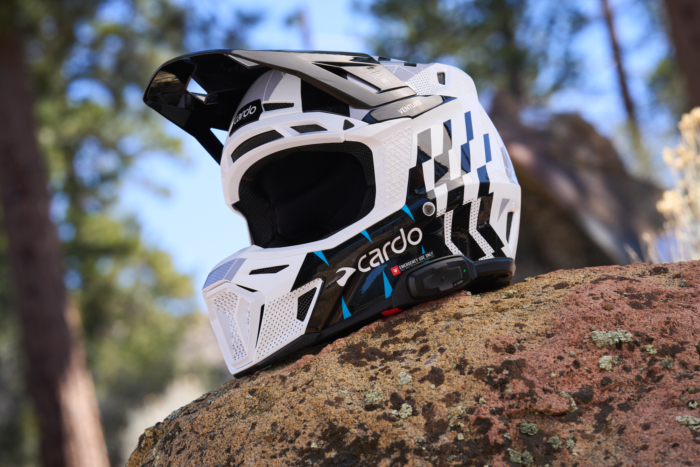
For years, dirt bike and UTV riders faced a constant trade-off: the social thrill of group outings versus the physical barrier of helmets that muffle voices and force shouted gestures. Cardo Systems, known for its Packtalk communicators that clamp onto street helmets, has eliminated that barrier with its Venture helmet. This is the first off-road helmet to ship with integrated mesh communications, embedding a full Packtalk Edge system directly into the shell. The result transforms a solitary activity into a connected one, whether coordinating with a riding partner, coaching a novice, or simply sharing the day's highlights while on the move. The Venture arrives as a ready-to-ride solution, removing the need for aftermarket kits and their associated bulk.
Dynamic Mesh: A Web of Voices That Fixes Itself
The Venture's headline technology is Cardo's Dynamic Mesh Communications, or DMC. Unlike Bluetooth intercoms that create a daisy-chain between units, DMC forms a peer-to-peer network where each helmet acts as a node. This allows up to 15 riders to join a group conversation, with the system automatically optimizing connections. The network limits active speakers to five at a time to prevent cacophony, ensuring voices remain clear. Its most robust feature is the self-healing capability; if a rider drops out of range and returns, the helmet automatically rejoins them to the group without manual re-pairing. The system also connects via Bluetooth to a smartphone for music streaming or calls, all controllable through natural voice commands like "Hey Cardo, stop music." This hands-free operation keeps a rider's focus on the trail.
 Image: Cardo)
A Composite Shell with a Brain for Injury Prevention
Cardo built the Venture's communication system into a helmet derived from the Leatt Moto 8.5, a high-end model with DOT and ECE safety certifications. To ensure signal strength, the shell uses a composite of Kevlar and fiberglass with less carbon fiber than the Leatt original, as carbon is an RF insulator. This keeps the weight under 1,500 grams for a medium size. Protection comes from a four-layer expanded polystyrene liner designed for progressive energy absorption. The helmet incorporates Turbine 360 technology—functionally identical to MIPS—which uses small elastomer discs to decouple the liner from the shell, reducing rotational forces during an impact. An emergency cheekpad removal system allows first responders to quickly extract the helmet post-crash via clearly marked pull loops, minimizing spinal jostling.
Ventilation and Fit: Engineered for a Full Day
With ten forward-facing vents, the Venture prioritizes airflow for hot-weather riding, a necessity for activities like thrashing a UTV in desert heat. This ventilation, while making the helmet noisier at speed, is critical for endurance. The design includes a breakaway peak visor with an included extension for added sun protection and a classic double D-ring chin strap favored for its secure, simple closure. Comfort is notably high, with the helmet fitting well even for testers with a long-oval head shape despite its intermediate-oval design—the most common shape in North America. The integrated comms module places the battery and processor at the rear neckline, with controls on the left side and a claimed 13 hours of talk time.
The Integrated Value: $799 for Helmet and Tech
Pricing the Venture at $799 positions it as a premium product, but a direct comparison with separate components reveals efficiency. The base Leatt Moto 8.5 helmet retails for $549, and the standalone Cardo Packtalk Edge ORV communicator costs $440. Buying both separately costs more than the Venture, delivering a net savings with the all-in-one package. Cardo backs the product with tiered warranties: five years on the helmet shell, three years on the communications electronics, and one year on the battery—two years if you live in the EU.
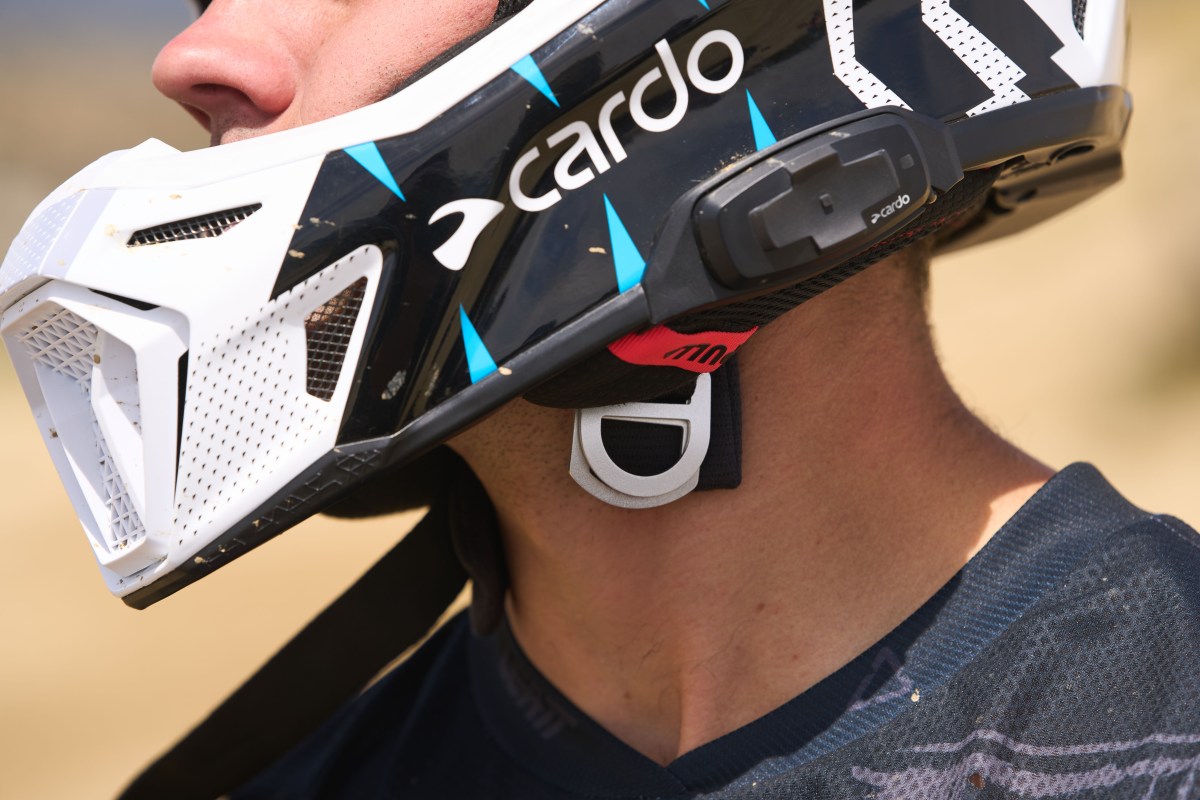 Image: Cardo)
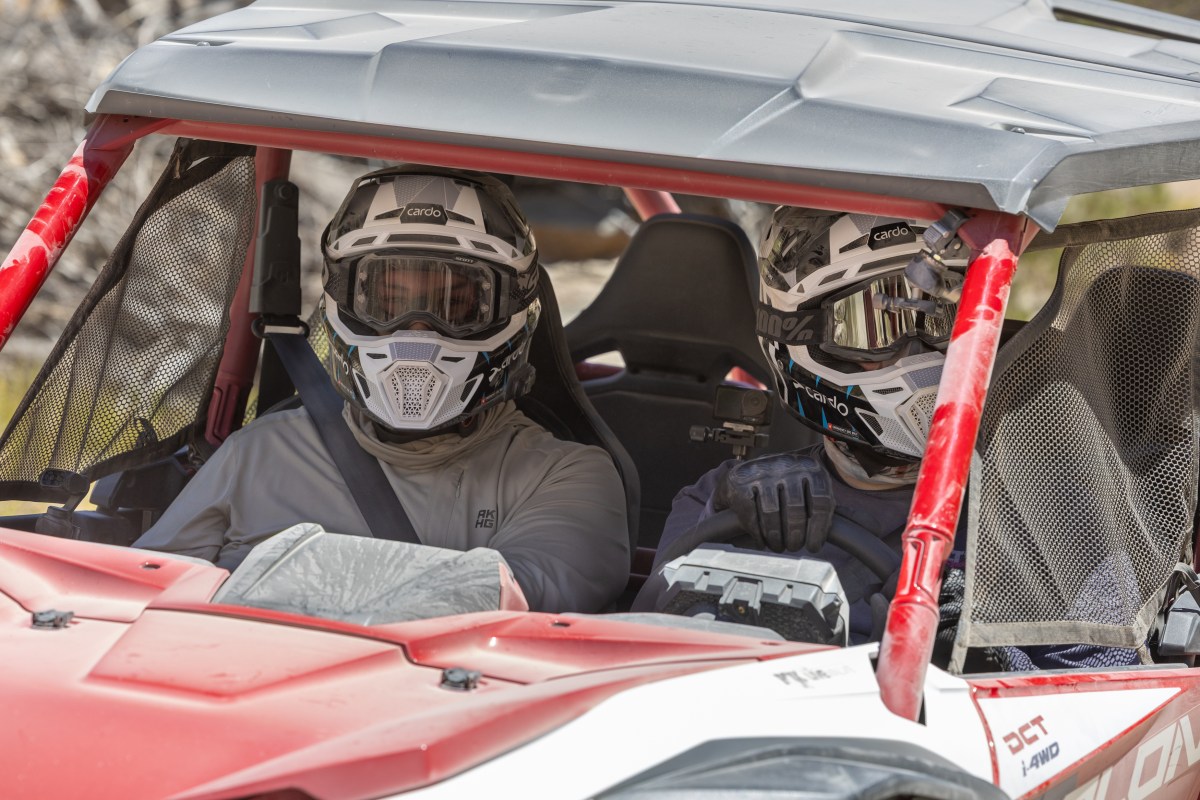 Image: Cardo)