Herman J. Koehler, West Point's Master of the Sword, Retired in 1923 and the System Died With Him
Herman J. Koehler, a graduate of the Milwaukee Normal School of Physical Training in 1882, was appointed West Point's Master of the Sword in 1885. By 1892, his system had spread across the entire US Army, built on the core conviction that the discipline of the individual determines the discipline of the mass. Koehler defined discipline as the voluntary, intelligent, coordinated, and cheerful subordination of every individual in equal degree with others in the mass, viewing them as interdependent units. His rational, strength-based approach involved apparatus work, calisthenics, and drills that aimed to build cadets physically, wake them mentally, fill them with enthusiasm, and instill personal discipline essential for Soldier self-reliance and courage. After his retirement in 1923, West Point dismantled his system and pivoted toward leisure sports and athletics—a trend mirroring civilian campuses. This decline persisted until WWII forced a painful reassessment, leading to a rebirth of classical physical readiness training that harkened back to Koehler's integrated methods.
Friedrich Ludwig Jahn Was Born in 1778 Into a Germany That Couldn't Fight Off Napoleon
Friedrich Ludwig Jahn was born in 1778, entering a Germany fragmented into hundreds of independent sovereignties too weak to resist Napoleon's armies. His response was a patriotic vision of rational physical training that included calisthenics, apparatus work, and running. This program physically transformed generations of young Germans into sturdy and productive citizens with a deep love for their homeland. Jahn's approach emphasized not only bodily health, strength, and agility but also the development of mental qualities like discretion, resoluteness, courage, and endurance. After a failed revolution in 1848, thousands of German immigrants brought this highly developed physical culture to the United States, where it took root in Turner societies and eventually influenced US Army doctrine through figures like Herman J. Koehler.
The First German-American Turnverein Gymnasium Opened in Cincinnati, Ohio in 1848
The first German-American Turnverein gymnasium opened in Cincinnati, Ohio in 1848, marking the formal arrival of German physical culture in the United States. Turnverein combines the German words turnen, meaning to practice gymnastics, and verein, meaning club or union. Within three years, 22 such societies were operating across the country, growing from this single establishment. By the outbreak of the Civil War, Turners were among the first to volunteer as organized units in the Northern Army; of an estimated 10,000 active members, roughly 6,000 enlisted. Their training methods were practical and refined, aiming to make the body healthy, strong, and agile while cultivating the personal qualities needed to produce sturdy, productive citizens. American Turner youth later demonstrated the effectiveness of these methods again during WWII, showing their enduring value.
The Benning PRT Study Traced Army Doctrine Back Through Europe to the Ancient Greeks
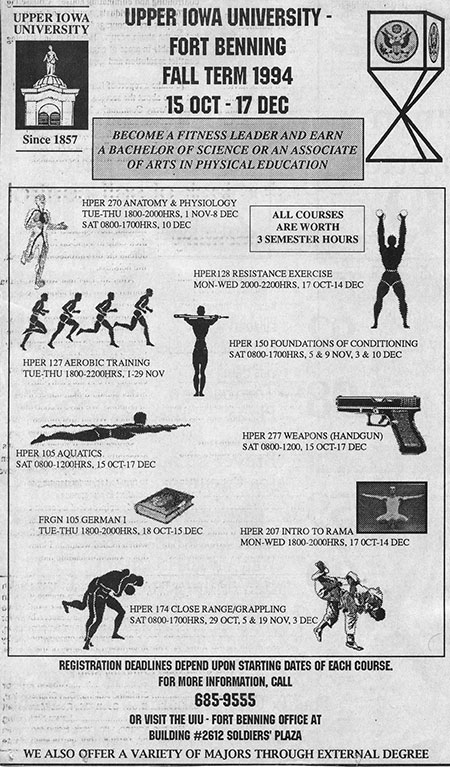
In 1994, a team of Soldiers and civilians at Fort Benning, Georgia launched a four-year, action-based investigation into US Army physical readiness training doctrine. They studied domestic and foreign PRT manuals, civilian books, documents, and films, seeking methods, materiel, and motivators to carry forward into future doctrine. Mainstream military and civilian historians had largely ignored Army PRT history, making this sustained, university-backed curriculum new, significant, and rare. Fort Benning's status as a massive schoolhouse—home to the Army Physical Fitness School, 75th Ranger Regiment, Ranger Training Brigade, and other key units—provided unparalleled access to both historical archives and current practitioners. The team operated out of a voluntary off-duty education program, and through persistent research, they eventually traced the roots of Army PRT through its European origins, like the German-American Turner influence, all the way back to the Ancient Greeks.
Ranger Matt Larsen, Ranger Jeff Struecker, and Sandra Uptagrafft All Came Through One Fort Benning Degree Program
Upper Iowa University ran a voluntary off-duty education initiative called the Restorative and Martial Arts degree program at Fort Benning from 1994 to 1998. It offered Soldiers promotion points, a unique university credential, and a structured chance to study past theory and practical application of Army physical readiness training. Participants included Ranger Matt Larsen, who later built the US Army combatives program; Ranger Jeff Struecker, whose convoy actions became central to the Black Hawk Down narrative; and Sandra Uptagrafft, who competed as an Olympic shooter. The program served as a PRT innovation test bed, blending academic exploration with hands-on study of training methods, materiel, and motivators. Many who participated went on to become familiar names in the Army community, and after the program ended in 1998, the Army Physical Fitness School began its own research.
Mabel Lee Designed a WWII Physical Training Doctrine Specifically for Women
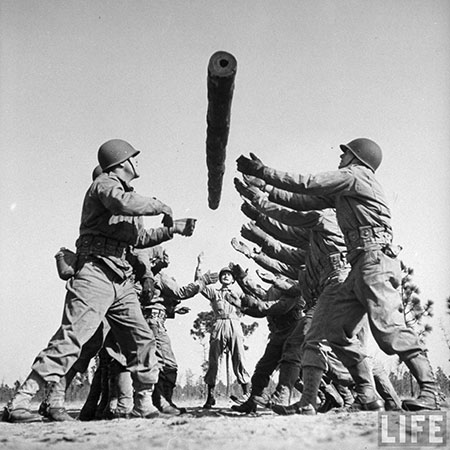
Mabel Lee, considered one of the most influential female physical educators of the twentieth century, was a primary architect of Women's Army Corps physical readiness training during WWII. She and her peers developed a practical, efficient, and refined doctrine designed by and for women serving in uniform. This WAC PRT involved exercises and methods tailored to female physiology and military needs, focusing on building health, strength, agility, and operational readiness while ensuring the training was sustainable and effective. The WAC operated successfully for decades, but President Jimmy Carter terminated it in 1978. Since then, the Army has undertaken the complicated and unfinished task of creating gender-integrated PRT that can match the specific standards and results achieved by the WWII WAC programs Lee designed, a challenge that continues today.
Turners Believed Physical Education Should Train Discretion, Resoluteness, Courage, and Endurance
German-American Turners held a specific philosophical view: physical education should cultivate the body to be healthy, strong, and agile—preserving it—while simultaneously developing the mental and moral qualities that would make citizens sturdy and productive. Their gymnasiums featured apparatus work, calisthenics, and group activities designed to foster both individual strength and collective discipline, where character building was an explicit training outcome. This integrated approach was not just about physical exercise but about molding citizens with a deep sense of duty. This blend of body and character directly influenced Herman J. Koehler's methods at West Point and, through him, US Army doctrine. When WWII exposed weaknesses from the athletics-focused interwar years, military planners rediscovered this Turner approach, and classical Army physical readiness training was reborn.